
SCS Blog
|
Blog: Ancient Ramming Warships: The Greek τριήρης and the Chinese 突冒Stephen DeCasien |In exploring the ancient world, we are reminded that distant civilizations were often not so different from one another. Whether in Greece or China, the challenges of defense, trade, and power led societies to place immense value on naval strength, on par with their armies and fortifications. One compelling example of this cross-cultural comparison can be seen in the study of two fascinating ancient warships: the Greek τριήρης (triḗrēs), commonly known by its Latinized… |
|
Tantalids: take ii - A New Play for an Ancient HorrorVanessa Stovall |What does it mean to use the stage to educate oneself about tragic texts? |

|
Blog: The Backstory to We Players’ Upcoming Odyssea Performance in San FranciscoAva Roy, James Ker, Nina Papathanasopoulou |As we look ahead to the Odyssea event at the SCS and AIA Annual Meeting in San Francisco, co-organizers James Ker and Nina Papathanasopoulou spoke to Ava Roy, Artistic Director of We Players, and discussed how this piece began its 13-year journey from a sailboat in San Francisco Bay to Angel Island to the San Francisco Hilton Union Square. |

|
Blog: Results from the first SCS CensusRachel Philbrick, Zachary Quint |Last fall, more than 1,500 members of the Classical Studies community participated in the first SCS Census. The aim of this survey, a project of the SCS Data Committee, was to learn about the careers and demographics of our community’s members, with the bigger goal of providing timely, accurate, and actionable information about the field to its members. One of the Data Committee’s main projects this year is to begin analyzing the data collected, and we would now like… |
|
SCS Blog: Part 2 of 2: Gender, Purity, and Artificial WomenAmy Norgard, Joshua Nudell |This is the second in a two-part piece about gender, myth, and AI. |
|
SCS Blog: Part 1 of 2: Pygmalion in the Age of AI CompanionsAmy Norgard, Joshua Nudell |This is the first in a two-part piece about gender, myth, and AI. Find Part 2 here. |
|
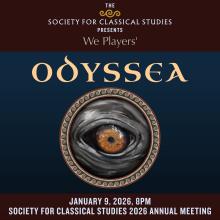
We Players Bring the Odyssey to Life at the AIA/SCS in San FranciscoNina Papathanasopoulou |During the 2025 AIA/SCS Joint Annual Meeting in Philadelphia, PA, the SCS Classics in the Community Committee inaugurated a new initiative: the integration of an ancient Mediterranean-themed public event hosted within the context of the annual meeting and aimed at both conference attendees and the public community. This programming is spearheaded by James Ker, Professor of Classical Studies at the University of Pennsylvania and Chair of the Classics in the Community… |

|
Blog: Biographies of Latin via the endangered TLL FellowshipKathleen Coleman |Why does the Thesaurus linguae Latinae matter? Because it is based upon analysis of every single instance of every single work surviving from classical antiquity down to approximately 200 CE, and all the lexicographically significant examples from 200 to 600 CE. This means that an article in the TLL crafts a portrait of a word in all its complexity and idiosyncrasy, from its earliest attestation until Latin morphed into the Romance languages. It is a bit like reading a… |
|
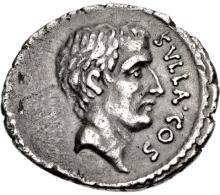
Blog: Elon Musk, Sulla, and the American “Crisis Without Alternative”Will Szymanski |Elon Musk’s views range from the unsavory to the bizarre. The political odyssey he has been on, from a self-described moderate who voted for Democrats to performing a Nazi salute on Donald Trump’s inauguration stage, defies straightforward analysis. But to the Roman historian, one view stands out from all the strangeness: his admiration for the dictator Lucius Cornelius Sulla. |
|
Blog: SCS Contingent Faculty Blog Series: Classics and UnionizationSN Yeager, Victoria Austen |Interview between Victoria Austen (VA) and SN Yeager (SNY) This interview has been lightly edited for clarity. VA: How did you become involved in the graduate student union? What were your initial motivations? |
|
Blog: Letting the Language Lead and the Meter FollowPeter Kotiuga |Peter Kotiuga discusses how having students learn the prosodic features of ancient Greek and Latin (e.g. syllable length, elision, and accentuation) early, as elements of pronunciation and independent of metrics, provides fresh opportunities to make lessons on meter more accessible, engaging, and discovery-driven. |

|
Blog: Help Support the ACLSJoy Connolly |On May 1, the organization I run, the American Council of Learned Societies (ACLS), filed suit to redress the damage done in April to the National Endowment for the Humanities (NEH), with the American Historical Association and the Modern Language Association serving as co-plaintiffs. Most readers of this blog will already know the devastation DOGE wrought: roughly 65% of the NEH staff were laid off, and most grants made under the Biden administration were cancelled,… |
|
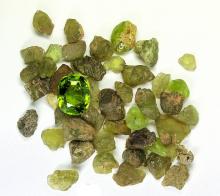
Blog: On Gems, Poetry, Peridot, and ClassicsKevin Solez |Kevin Solez reflects on the parallels between working with gems and ancient poetic texts while offering a new translation of Posidippus Lithika 7. |
|
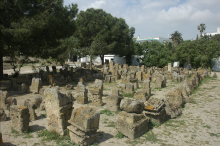
Blog: The Importance of Names: The Carthaginian ‘Tophet’ at 100Nathan Pilkington |Nathan Pilkington calls for the abandonment of the term “tophet,” generally, and a renaming of the “tophet” at Carthage, specifically. Based on the epigraphic record at Carthage, a more proper name for the site is The Sanctuary of Ba'al Hamon. |

|
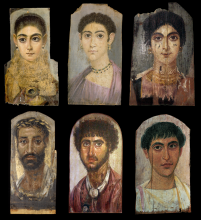
Blog: Diversity, Equity and Inclusion in the Roman ArmyMichael Taylor |Michael Taylor reflects on the Roman army as a multi-ethnic force, where the principles of diversity, equity, and inclusion underpinned its effectiveness in the field. Recoiling against Trump’s recent erasure of the contribution of women and minorities in the nation’s service, he examines Roman traditions celebrating the contribution of non-citizen Italian officers and their contingents. |
|
Blog: The Benefits and Costs of DEI Research in ClassicsArum Park |Over the past half-decade or so, I’ve written and spoken a lot about race, diversity, and Classics. As a woman of color in a historically white and male field, I have experienced my “fair” share of race- or gender-based injustice, so it feels rewarding (and overdue) to witness and participate in the discipline’s current moment of critical self-reflection. Each of my DEI-focused projects, essays, and speaking engagements has given me a kind of satisfaction that I do not… |
|
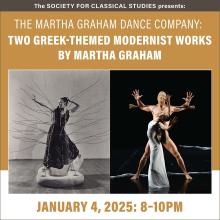
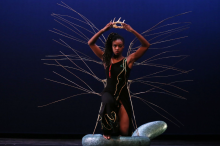
Blog: Greek Myth, Martha Graham, and the Society for Classical Studies: Classicists, Archaeologists, and the Public in Philadelphia Enthralled by Martha Graham Dance Company PerformanceRonnie Ancona |On January 4, 2025, the Martha Graham Dance Company, with sponsorship by the Society for Classical Studies, which was holding its annual meeting in Philadelphia along with the Archaeological Institute of America, performed two Greek-themed dances: a duet, Errand into the Maze (1947), loosely based on the Ariadne, Theseus, and Minotaur myth; and Cave of the Heart (1946), based on the story of Medea, for a sold-out audience at the Suzanne Roberts Theatre. Graham’s… |

|
Blog: What I Learned at Coin CampPatricia Hatcher |Patricia Hatcher reflects on her interdisciplinary studies during the American Numismatic Society’s summer graduate seminar. The ANS taught skills to succeed in academia and unsuspectingly showcased alternative careers for those studying the ancient world. |

|
Introducing the SCS 2024 CensusRachel Philbrick |The Newly-formed SCS Data Committee Announces its First Annual Census |
|
Blog: Medea and Ariadne Reimagined: Honoring Martha Graham’s Deep Engagement with Greek MythNina Papathanasopoulou |Nina Papathanasopoulou discusses in further detail the two Martha Graham Greek-themed dances that will be performed as part of this year’s joint SCS/AIA 2025 Annual Meeting. |